
How Medications Travel Through Your Bloodstream
Understand pharmacokinetics — how drugs are absorbed, distributed, metabolized, and excreted — and why factors like bioavailability, half-life, and the blood-brain barrier matter.
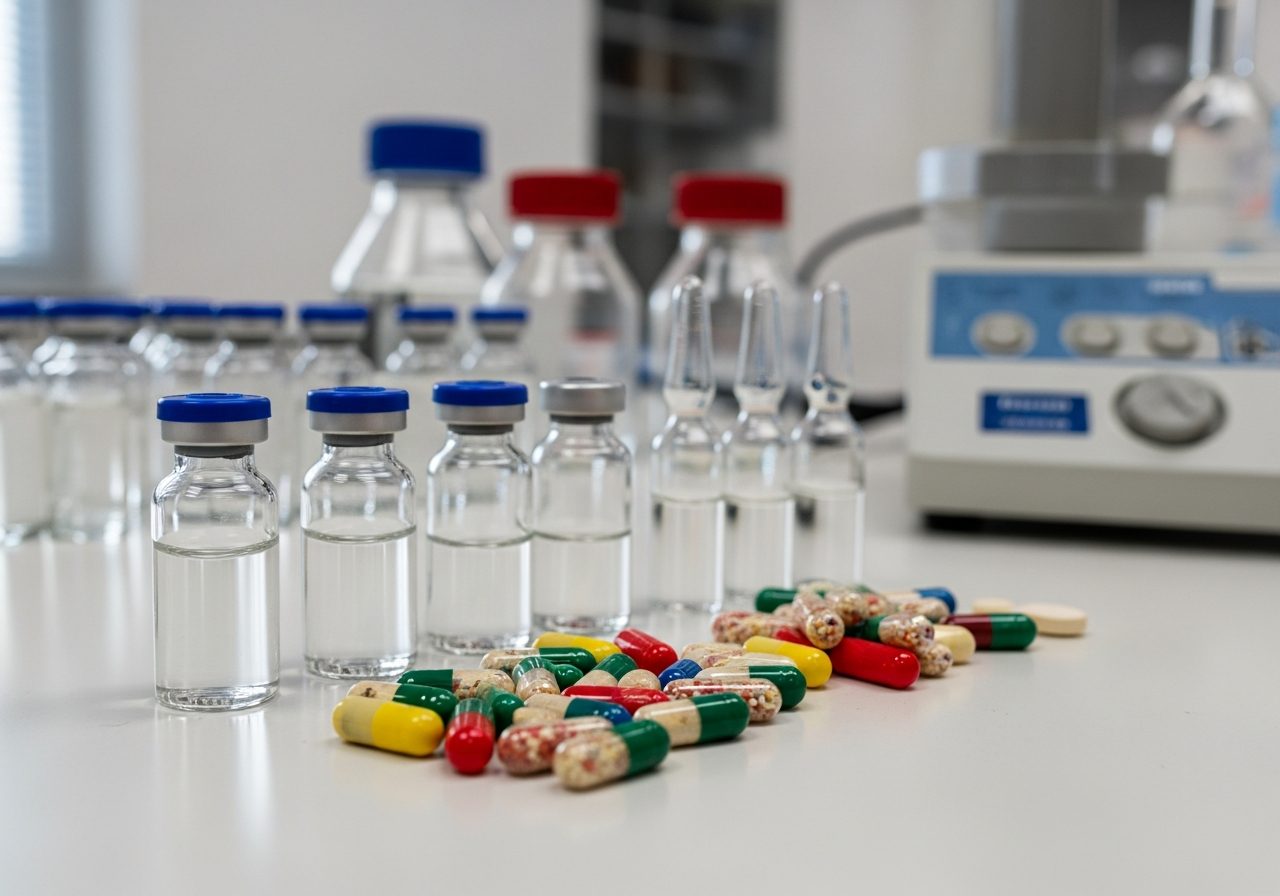
Every medication you take begins a journey the moment it enters your body — a journey through biological barriers, enzyme systems, protein networks, and filtration organs before it reaches its target. This journey is called pharmacokinetics, and understanding it explains why two people can take the same dose of the same drug and have entirely different experiences, why some medications must be taken with food and others on an empty stomach, and why a missed dose sometimes matters more than at other times.
The Four Stages: ADME
Pharmacokinetics is organized around four core processes, typically abbreviated as ADME: Absorption, Distribution, Metabolism, and Excretion.
Absorption: Getting Into the System
Absorption describes how a drug moves from its site of administration into the bloodstream. The route of administration fundamentally shapes this process.
Oral administration (swallowing a tablet or capsule) is the most common route but also the most complex. The drug must survive the acidic environment of the stomach, cross the intestinal epithelium, and enter the portal circulation. Many factors influence this:
- pH: Some drugs are absorbed primarily in the acidic stomach; others in the alkaline small intestine. Acid-reducing medications (PPIs, H2 blockers) can alter absorption of drugs that require stomach acid for dissolution.
- Food: High-fat meals can either increase absorption (for lipophilic drugs) or delay gastric emptying, slowing absorption. Food instructions on medication labels are not arbitrary.
- Formulation: Extended-release (XR, ER, CR) formulations use polymer matrices or membrane coatings to slow drug release, extending absorption over hours and smoothing out peak-trough fluctuations.
- Drug transporters: The intestinal wall expresses active transport proteins that can both import drugs (uptake transporters) and actively pump them back out (efflux transporters like P-glycoprotein), affecting how much actually enters circulation.
Intravenous (IV) administration bypasses absorption entirely — the drug enters the bloodstream directly with 100% bioavailability. This is why IV doses are often lower than oral equivalents and why IV medications act more rapidly.
Other routes — subcutaneous, intramuscular, transdermal, inhaled, sublingual — each have characteristic absorption profiles balancing speed, duration, and practicality.
Bioavailability and the First-Pass Effect
Bioavailability is the fraction of an administered dose that reaches systemic circulation in active form. For IV drugs, bioavailability is 100% by definition. For oral drugs, it is almost always less than 100% — sometimes dramatically so.
The primary reason is the first-pass effect: after oral absorption, drugs are carried through the portal vein directly to the liver before reaching systemic circulation. The liver contains dense concentrations of drug-metabolizing enzymes (particularly the cytochrome P450 family), which can metabolize a significant portion of the drug before it ever reaches its target.
Some drugs have first-pass metabolism so extensive that oral administration is impractical — morphine, for example, has approximately 30% oral bioavailability compared to parenteral routes, requiring much higher oral doses to achieve equivalent effect. Nitroglycerin, with near-zero oral bioavailability, is administered sublingually or transdermally to bypass the liver.
The first-pass effect also explains why certain drugs are “prodrugs” — they are pharmacologically inactive as administered but are converted to active metabolites by hepatic enzymes. Codeine, for example, must be converted to morphine by CYP2D6 to exert its analgesic effect. Patients lacking functional CYP2D6 (poor metabolizers) receive little benefit, while ultra-rapid metabolizers may convert it so quickly that standard doses produce dangerously elevated morphine levels. Understanding the pathway through the veins and circulatory system helps contextualize why hepatic first-pass is so significant in oral pharmacology.
Distribution: Spreading Through the Body
Once in the bloodstream, a drug distributes throughout the body’s compartments — blood, plasma, interstitial fluid, and intracellular spaces. This distribution is not uniform and is governed by several factors:
Protein Binding: Most drugs bind reversibly to plasma proteins, primarily albumin (for acidic drugs) and alpha-1-acid glycoprotein (for basic drugs). Only the unbound, free fraction is pharmacologically active — protein-bound drug cannot cross membranes or reach receptors. In hypoalbuminemia (liver disease, malnutrition), more drug remains unbound, potentially intensifying effects at standard doses.
Volume of Distribution (Vd): This is a mathematical concept describing how extensively a drug distributes outside the plasma. A high Vd indicates the drug distributes widely into tissues — lipophilic drugs accumulate in fatty tissue and may have very high Vd values. Hydrophilic drugs tend to stay closer to the plasma compartment with lower Vd. Vd influences dosing intervals and loading dose calculations.
Tissue Affinities: Some drugs accumulate selectively in specific tissues — amiodarone in the lungs, chloroquine in the liver, tetracyclines in bone — producing prolonged effects but also potential organ-specific toxicity.
The Blood-Brain Barrier
The blood-brain barrier (BBB) deserves special attention because it is the most clinically significant distribution barrier in pharmacology. The BBB consists of specialized endothelial cells forming the brain’s capillaries, joined by exceptionally tight junctions and surrounded by astrocyte endfeet. Unlike most of the body’s vasculature, the BBB severely restricts paracellular transport — substances cannot simply leak between cells.
Drugs that cross the BBB effectively tend to be:
- Lipophilic (able to dissolve into and through the lipid membrane)
- Small molecules
- Not substrates for efflux pumps (P-glycoprotein at the BBB actively expels many substances back into blood)
- Uncharged at physiological pH
This explains why many antibiotics that adequately treat systemic infections cannot penetrate CNS infections. It explains why fentanyl (highly lipophilic) has much faster CNS onset than morphine (more hydrophilic). And it explains why designing drugs that act in the brain is substantially harder than designing drugs for peripheral targets.
Metabolism: Transformation in the Liver
Drug metabolism converts compounds into forms that are more water-soluble and thus more easily excreted. The liver is the primary site, though the intestinal wall, kidneys, lungs, and plasma all contribute.
Phase I metabolism (predominantly cytochrome P450 enzymes) modifies the drug through oxidation, reduction, or hydrolysis. This often produces intermediate metabolites that may be active, inactive, or more toxic than the parent compound.
Phase II metabolism conjugates the Phase I products (or original drug) with polar molecules — glucuronic acid, sulfate, glutathione — via enzymes like UGTs and SULTs, greatly increasing water solubility for renal excretion.
CYP450 Drug Interactions: The CYP450 enzymes (particularly CYP3A4, CYP2D6, CYP2C9, CYP2C19) are responsible for metabolizing the majority of pharmaceuticals. When two drugs share the same enzyme, competition occurs — one may inhibit the other’s metabolism, raising its plasma levels. Conversely, some drugs (carbamazepine, rifampicin) strongly induce CYP450 expression, accelerating metabolism of co-administered drugs and reducing their efficacy.
Half-Life and Dosing
The half-life (t½) of a drug is the time required for plasma concentration to fall by 50%. It is a derived parameter from metabolism and excretion rates.
Half-life determines:
- Dosing frequency: Drugs with short half-lives require more frequent dosing to maintain therapeutic levels; long half-lives allow once-daily administration
- Time to steady state: Approximately 4–5 half-lives are needed to reach steady-state plasma concentrations with regular dosing
- Duration of effect after discontinuation: A drug with a 24-hour half-life will still have measurable plasma levels 5 days after the last dose
This has practical implications for drugs like fluoxetine (half-life ~2–6 days including active metabolite) where missed doses matter less, versus short-acting benzodiazepines where plasma levels fall sharply between doses, contributing to interdose anxiety and withdrawal symptoms.
Excretion: Leaving the Body
Renal excretion is the primary elimination route for most drugs and metabolites. The kidney filters free drug from plasma at the glomerulus, and active tubular secretion can further eliminate drugs bound to transporters. Renal tubular reabsorption of lipophilic compounds offsets some excretion.
Hepatic excretion via bile into the gastrointestinal tract is important for some drugs, occasionally leading to enterohepatic recirculation — reabsorption from the intestine extends effective half-life and complicates the pharmacokinetic picture.
Renal impairment reduces clearance, requiring dose adjustments to prevent drug accumulation. Creatinine clearance (or eGFR) is routinely used to guide these adjustments. Medications like Glyciphage (metformin 500mg), for instance, are contraindicated or dose-adjusted in significant renal impairment due to impaired renal clearance and risk of accumulation.
Individual Factors Affecting Drug Levels
A consistent truth in pharmacokinetics is that population averages explain individual patients imperfectly. Key sources of variability include:
- Genetics (pharmacogenomics): Polymorphisms in CYP enzymes, drug transporters, and receptor genes create meaningful individual variation in drug effect and toxicity risk
- Age: Neonates have immature metabolic capacity; older adults have reduced hepatic blood flow, renal function, and body water, all affecting pharmacokinetics
- Body composition: Volume of distribution for lipophilic drugs changes with obesity; protein binding changes with malnutrition or liver disease
- Renal and hepatic function: Both clearance pathways are directly affected
- Drug interactions: As described above, particularly CYP450 interactions
- Food and timing: As described in the absorption section
The intersection of pharmacokinetics with clinical practice — predicting how a specific patient will respond to a specific drug at a specific dose — is the domain of therapeutic drug monitoring, pharmacogenomics, and increasingly, computational pharmacology modeling.
The NIH National Institute of General Medical Sciences provides accessible resources on pharmacogenomics and how genetic variation influences drug response.